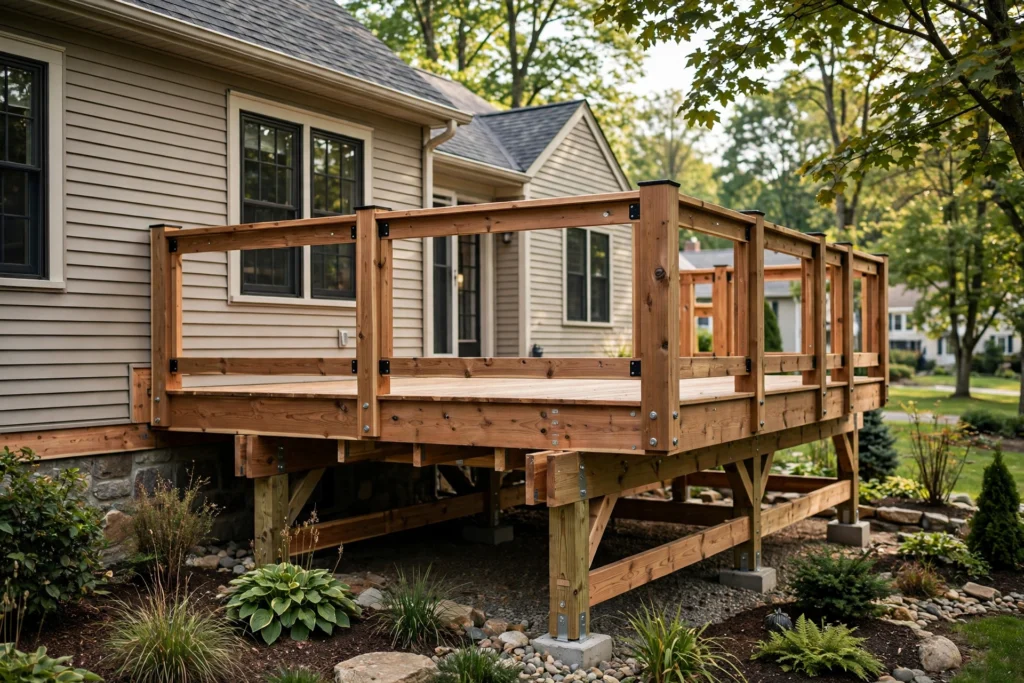
Wood decking offers a familiar, natural appearance and can suit a wide range of homes and budgets. The right choice depends on the type of wood, the desired finish, exposure to sun and moisture, and how much ongoing care you are willing to provide.
Choosing a wood deck
Pressure-treated lumber is commonly used for residential deck construction and can be a practical choice when budget is a priority. Other wood species may offer different colors, grain patterns, or natural characteristics, but availability, cost, and maintenance needs vary. Any wood product used outdoors should be suitable for its intended application and installed according to applicable requirements.
Wood changes with weather and time. Depending on the species and conditions, boards may fade, weather, develop checks, or move as moisture levels change. Regular inspection and appropriate cleaning or finishing help homeowners spot issues and maintain the appearance they prefer.
Plan for maintenance from the beginning
Before choosing wood, consider whether you are comfortable with periodic cleaning and the potential need for a stain, sealer, or other finish. The correct timing depends on the product, local exposure, and manufacturer guidance. Avoid assuming every deck needs the same treatment on the same schedule.
Good drainage and airflow also matter. Leaves and debris can hold moisture against surfaces, while poor drainage can contribute to deterioration. The design should account for water movement, ground conditions, and access for routine cleaning.
Design details still matter
A wood deck can be simple or highly customized. Think about the deck’s shape, stairs, railing style, privacy, lighting, and whether you want a pergola or another shade feature. These choices affect appearance and project cost just as much as the decking boards themselves.
For a replacement deck, do not assume the old framing can automatically be reused. It should be evaluated for condition and suitability for the new design. Structural work and permits should be considered before demolition or construction begins.
Is wood right for your project?
Wood may be a good fit if you prefer its natural look, want to compare lower initial material costs, and are comfortable with ongoing care. Composite may be worth considering if reducing routine surface maintenance is a priority. Request an estimate to discuss your ideas and compare options.
Frequently asked questions
Does a wood deck need to be stained?
The appropriate finish and maintenance schedule depend on the wood product, exposure, and desired appearance. Follow the product manufacturer’s recommendations.
Will wood change color over time?
Wood commonly weathers outdoors. The amount and appearance of change depend on species, sunlight, moisture, and whether a finish is used.
Can I mix wood decking with composite railings or trim?
Some combinations are possible, but component compatibility, attachment details, appearance, and code requirements should be checked during design.