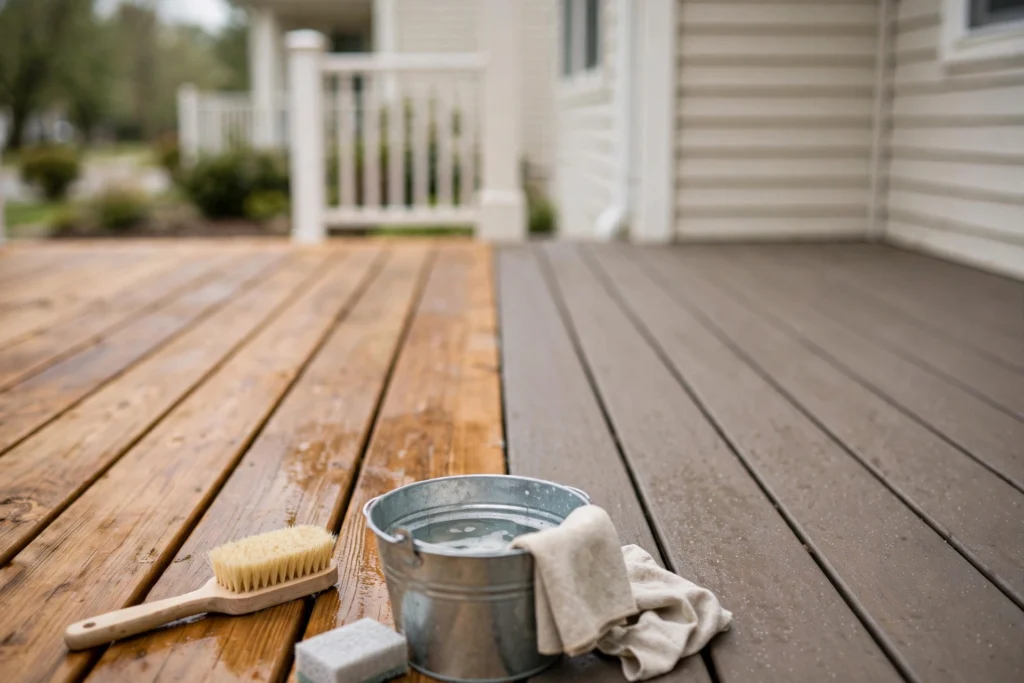
A little routine attention can help keep an outdoor deck more pleasant to use and make it easier to notice developing problems. The right maintenance depends on the decking material, the product’s instructions, exposure to sunlight and moisture, and the condition of the structure.
Basic upkeep for any deck
- Remove leaves, dirt, and debris that collect between boards or around stairs.
- Keep drainage paths clear and watch for water that repeatedly pools near the deck.
- Check visible boards, stairs, railings, and fasteners periodically.
- Trim vegetation that traps moisture or blocks airflow, where appropriate.
- Follow product-specific instructions for cleaning solutions and tools.
- Pay attention to changes in movement, looseness, or stability.
Wood decking
Wood can weather and change color outdoors. Depending on the species, finish, and exposure, it may need periodic cleaning and a suitable stain, sealer, or other finish to achieve the appearance and protection desired. Do not assume every wood deck needs the same product or schedule. Follow the lumber and finish manufacturers’ recommendations and test cleaning methods in an inconspicuous area when appropriate.
Avoid using aggressive pressure or harsh chemicals without confirming they are suitable for the wood and finish. Improper cleaning can damage the surface or create an uneven appearance.
Composite decking
Composite decking generally does not require the same recurring staining or sealing as many wood products, but it still needs cleaning. Dirt, pollen, food spills, leaves, and mildew can affect the surface. Use the specific manufacturer’s care instructions because cleaning products and methods differ among brands and product lines.
Composite boards can also be affected by scratches, heat, stains, and product-specific limitations. Review the warranty and maintenance guidance for the actual decking installed.
Railings, stairs, and structure
Do not focus only on the deck surface. Check whether railings move, stair treads feel secure, visible fasteners show corrosion, or the structure has changed noticeably. These observations do not replace a structural inspection, but they can help identify when professional evaluation is needed. If a component seems unstable, keep people away from it until it can be assessed.
Seasonal checks
After periods of heavy rain, freeze-thaw weather, or falling leaves, look for drainage issues, debris buildup, or new movement. Before outdoor entertaining season, check the walking surface and access routes. Use care with snow and ice removal methods, and follow the material manufacturer’s guidance.
When maintenance is not enough
Persistent soft areas, widespread deterioration, unstable railings, damaged stairs, or movement around supports deserve further evaluation. Repair may be possible, but replacement may be appropriate if problems are extensive or the supporting structure is compromised.
If you have concerns about an existing deck, send a project inquiry and describe what you have noticed.