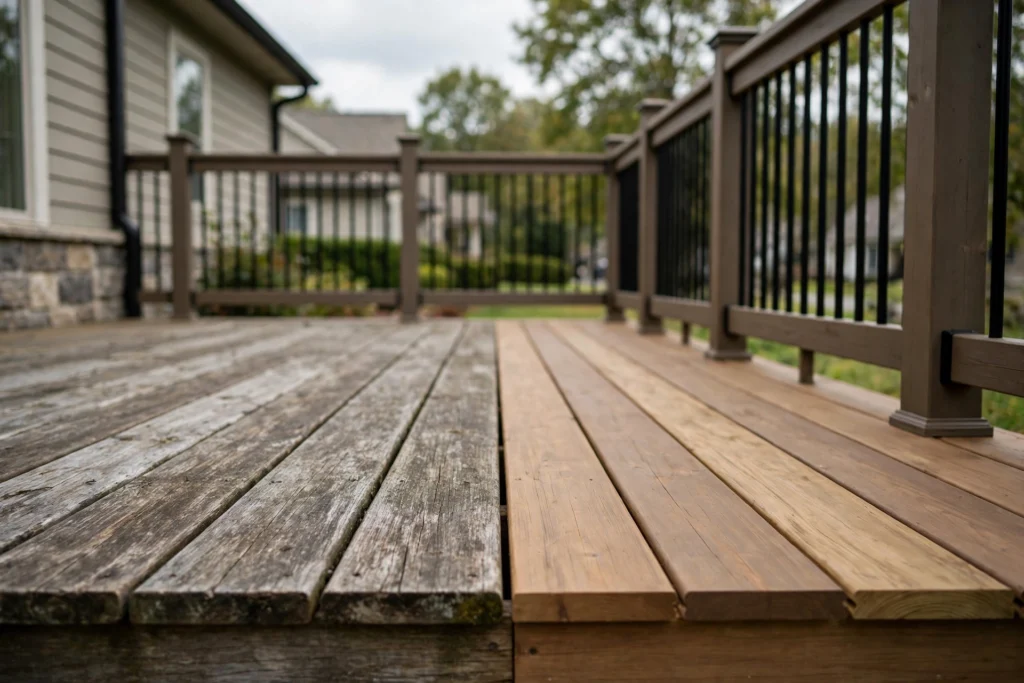
When a deck starts to show its age, it is natural to wonder whether a repair will be enough or whether replacement is the better long-term decision. The answer depends on the extent of deterioration, the condition of the supporting structure, the practicality of repairing the affected areas, and whether the deck still suits your needs.
Signs that deserve attention
Look for loose or cracked boards, soft or deteriorated wood, movement in railings, unstable stairs, corrosion around hardware, or visible damage near posts and connections. Water collecting around the structure or soil eroding near supports may also deserve investigation. These signs do not all mean the deck needs full replacement, but they should not be ignored.
If stairs feel unstable, a railing moves noticeably, or structural components appear damaged, keep people away from the affected area until it has been evaluated. Photos and surface checks cannot confirm that hidden framing or connections are sound.
When repair may make sense
Repair may be practical when the issue is limited, the surrounding structure is in suitable condition, and replacement parts can be installed correctly. Examples might include isolated surface damage or a specific component that can be replaced without compromising the rest of the deck. The underlying cause should be addressed, not just the visible symptom.
When replacement deserves consideration
A rebuild may be worth considering when deterioration is widespread, multiple structural components are affected, the deck is poorly suited to current needs, or repeated repairs are becoming impractical. Replacement can also provide an opportunity to change the size, layout, stairs, railing, or decking material.
Compare the full scope
Ask what a repair would include, what remains in place, and what risks are associated with components that cannot be fully inspected. For replacement, clarify demolition, disposal, framing, stairs, railings, materials, and permit-related work. Compare the likely result and scope, not just the initial number.
Prepare for an assessment
Note when the problems began, where they occur, whether the deck moves, and whether any previous repairs were made. Take photos from several angles, but do not climb onto a deck that appears unsafe to document it. Include the property location and approximate deck size when requesting help.
Request an estimate to discuss whether repair or replacement may be the right next step. A final recommendation should follow an appropriate evaluation of the existing structure.