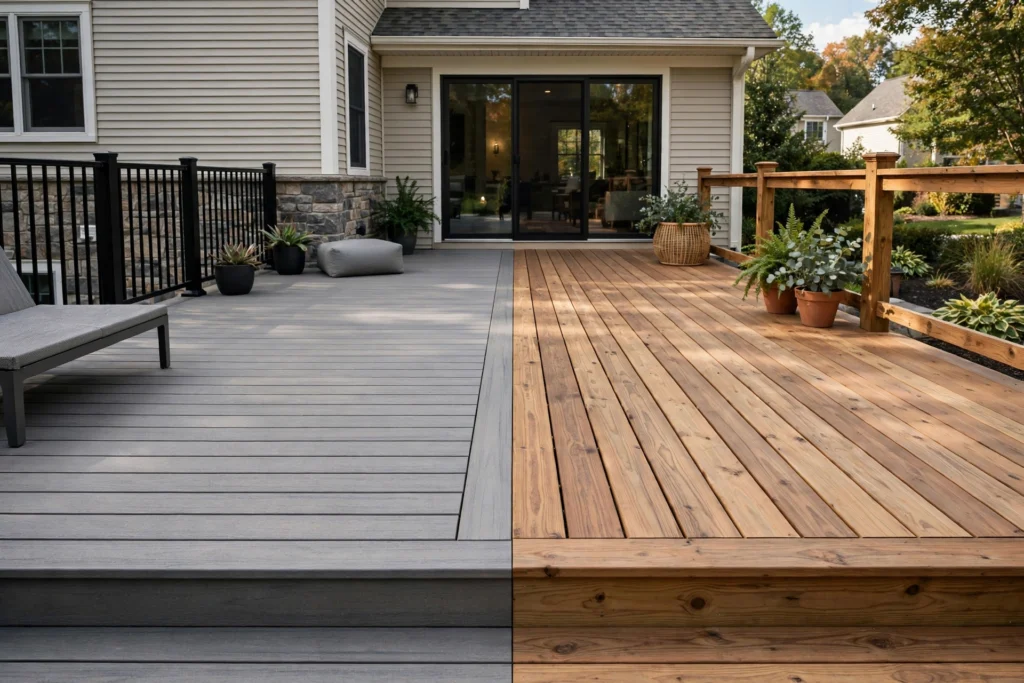
Choosing decking is one of the most visible decisions in a new deck project. Composite and wood can both create an attractive outdoor space, but they differ in upfront cost, maintenance, surface feel, appearance, and how they change over time. The best choice is the one that fits your priorities, not a universal winner.
Compare the main trade-offs
Upfront cost: Pressure-treated wood often has a lower initial material cost than many composite products. Premium wood and higher-end composite products can change that comparison. Total project cost also includes framing, railings, stairs, fasteners, demolition, and labor.
Maintenance: Wood may need periodic cleaning and, depending on the product and desired finish, staining or sealing. Composite generally avoids that type of recurring finish work, but still requires cleaning and care according to the manufacturer’s instructions.
Appearance: Wood has natural grain and variation. Composite products offer a range of colors and embossed patterns, with variation between brands and product lines. Look at physical samples in outdoor light before committing.
Weathering: Wood can change color, develop checks, and move as moisture levels change. Composite can also experience color change, surface marks, stains, or heat-related limitations depending on the product and conditions.
Repair and replacement: Individual boards can sometimes be replaced in either system, but access, fastening methods, color matching, and product availability influence how practical a repair will be.
Questions to ask before choosing
- How much routine maintenance are you comfortable doing?
- Is a lower upfront price more important than reducing recurring finish work?
- How much direct sunlight reaches the deck?
- Do you prefer natural wood grain or a consistent manufactured finish?
- Are you replacing an existing surface or building a new deck?
- Which railing and trim options work with the decking you like?
Do not compare boards alone
A deck is a system. The supporting frame, joists, fasteners, stairs, railing, drainage, and installation details must work with the selected decking product. If replacing an existing deck surface, the framing should be evaluated rather than assumed suitable.
Make a practical shortlist
Choose two or three products or wood options, compare samples, read the care instructions, and look at the complete cost of the design. Ask what is included in the estimate and whether fascia, stair treads, railing, demolition, and disposal are included.
Next step: Request a deck estimate and share your preferred look, approximate size, and maintenance priorities.
Quick takeaway
Choose wood if its natural appearance and potentially lower initial material cost suit your priorities and you are comfortable with its care needs. Consider composite if you want to reduce routine staining or sealing and are comfortable with the higher initial cost common to many products. Compare specific products before deciding.